 Diving
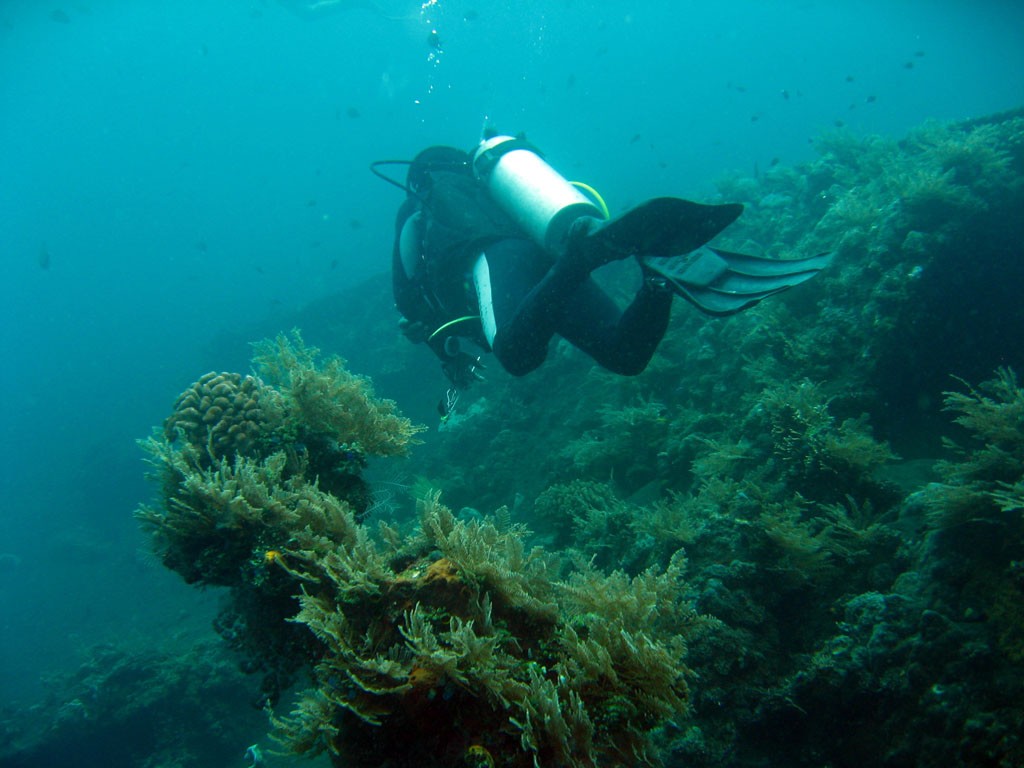
Tulamben Wreck Dive
amed Half day
Shore dives on the USAT Liberty wreck at Tulamben, suitable for certified divers and popular as an introductory wreck dive.
Things to do in Bali
Bali scuba diving ranges from accessible shore dives and sheltered training sites to deep walls and fast drift dives. The island supports introductory experiences, certification courses and guided dives for qualified divers, but the right site depends on experience, conditions and the operator's assessment on the day.
Tulamben and Amed anchor the east-coast diving scene. Tulamben's best-known site is the USAT Liberty wreck, reached from the shore over smooth volcanic stones, while Amed offers reefs, walls and bays used for both training and relaxed certified dives. Menjangan, in Bali's north-west, is known for clear water and wall diving, but requires a long road journey or a stay in the north. Nusa Penida and Nusa Lembongan offer manta sites and current-driven channels for suitably experienced divers.
First-time divers should choose a recognised introductory programme with confined-water instruction and a closely supervised open-water dive. Certified divers should bring proof of certification and an honest account of recent experience. Nusa Penida can involve cold thermoclines, surge and strong currents, so a responsible operator may suggest a different site when conditions or experience do not match. Leave at least 18–24 hours between your last dive and flying, and follow the longer interval advised after repetitive or deeper dives.
1 experience
DivingShore dives on the USAT Liberty wreck at Tulamben, suitable for certified divers and popular as an introductory wreck dive.
Tulamben is the practical choice for the USAT Liberty and straightforward shore access. Nearby Amed gives divers a broader coastal base, with reefs and bays suited to training and easier recreational dives. Both areas avoid the long daily return from the south when you want several days in the water.
Nusa Penida is better known for manta sites, cooler water and demanding drift conditions. Menjangan offers a different experience again: north-west wall diving in a marine park, reached most comfortably from Pemuteran or another north-coast base.
An introductory dive is not the same as certification. It normally combines a briefing, basic skills and a shallow supervised dive. Travellers who want to dive independently on future trips need a recognised open-water course with theory, confined-water work and multiple open-water dives.
Certified divers should choose sites based on recent experience, not certification level alone. Tell the operator when you last dived, how many dives you have logged and whether you are comfortable with current, cold water or negative entries. A conservative site change is a sign of a responsible operator, not a missed opportunity.
Bali can be dived throughout the year, but visibility, swell and current change by coast and by day. The dry season often brings clearer conditions, while exposed crossings and Nusa Penida sites can still be rough. No season guarantees manta rays, mola mola or any other marine life.
Compare operators on safety practice rather than the lowest advertised price. Check group size, guide-to-diver ratios, equipment condition, emergency oxygen, first-aid capability and what happens if the planned site is unsuitable. Travel insurance should explicitly cover scuba diving to the depth and qualification level you intend to use.
Non-divers can compare calmer reef experiences in our Bali snorkelling guide. If your dive base is outside the south, review Bali transfer routes before choosing flight-day accommodation, and keep the required no-fly interval after your final dive.
Bali deals newsletter
We'll send you the latest Bali hotel, flight and holiday deals. No spam, and you can unsubscribe at any time.